Zealandia Wildlife On A Guided Tour: Takahe, Kaka, Tuatara And More
The wildlife is the whole point of a guided Zealandia walk. Here is what the sanctuary's own tour pages say guides look for, what each species' return took, and what no tour will ever promise.
Short answer
Day-walk guides look for takahe, tuatara, hihi, kaka, tieke, toutouwai and pateke, plus tui, kereru and korimako. Night walks add little spotted kiwi, ruru, wetapunga, Hamilton's frog and glowworms. Every sighting is a chance, never a promise; kiwi are seen on most night tours but are very unlikely by day.
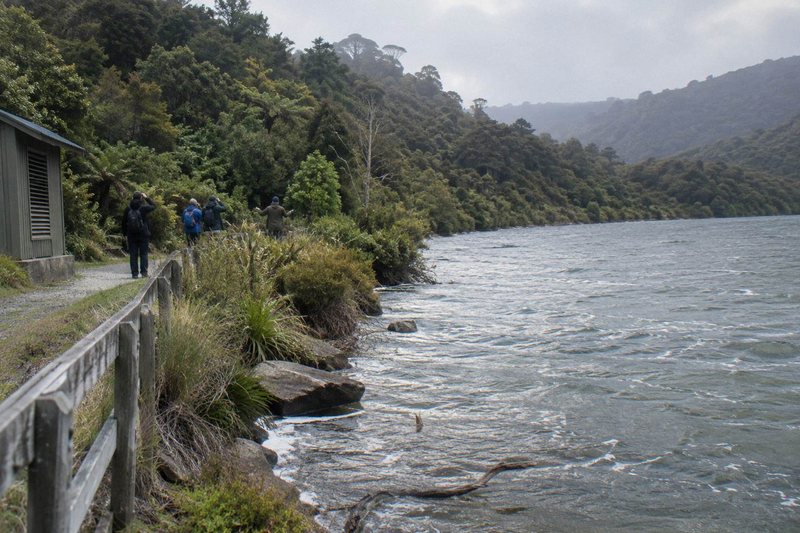
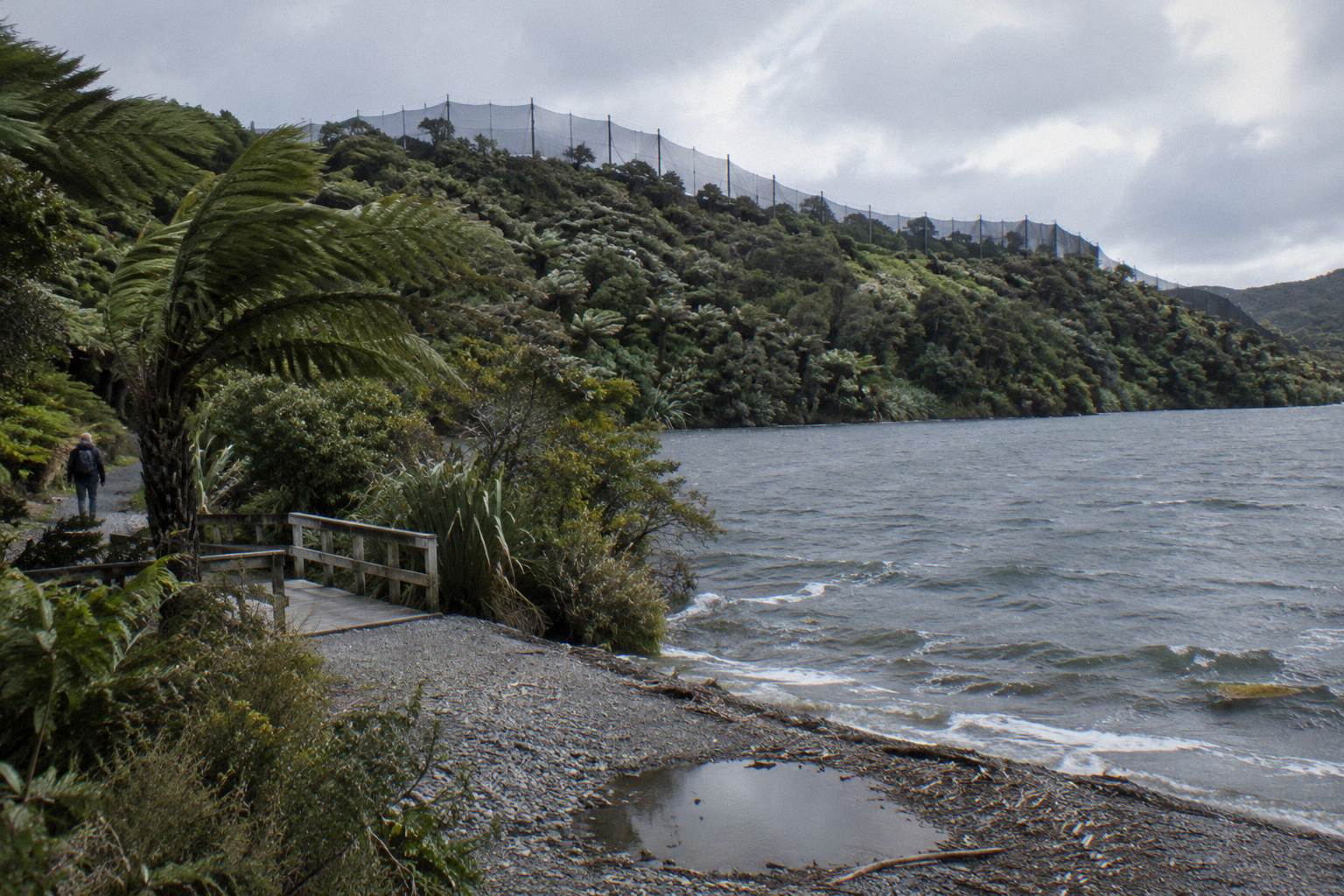
An 8.6 km predator-exclusion fence finished in 1999 turned a retired Wellington water-supply valley into the world's first fully fenced urban ecosanctuary. Inside those 225 hectares, more than 32 km of tracks thread through a forest where species that vanished from the mainland decades ago now walk, glide and call. That wildlife is the main reason to pay for a guide rather than wander alone: a guide knows the feeding stations, the favourite perches and the difference between a kereru wing-clatter you just missed and a kaka flock about to cross the valley.
What follows is a roll-call built from the sanctuary's own tour pages and species pages, not from a traveller's lucky afternoon. Every animal here is written the way the sanctuary writes about them: as chances. The day walk and the night walk are different worlds, and the article separates them, then closes with the mistakes that trip wildlife expectations up most often.
Which Animals Do Guides Look For On The Day Walk?
Zealandia By Day guides look for takahe, tuatara, hihi, kaka, tieke, toutouwai and pateke, alongside familiar forest birds such as tui, kereru and korimako. The tour runs about two hours in a group of up to 12, daily, with departures from 10am and more in summer. Every animal is a chance, never a promise, and the walk itself covers slopes, gravel and uneven ground.
The day tour starts inside the visitor centre at 53 Waiapu Road in Karori with a short introductory video, then heads into the valley. It is described by the operator as not strenuous, though reasonable fitness is needed for the slopes and gravel. There is no minimum age, under 5s are free, and children must be accompanied by an adult. Sturdy shoes, warm clothes and a waterproof layer are the recommended kit, because the tour runs in almost all weather, and only extreme conditions call it off.
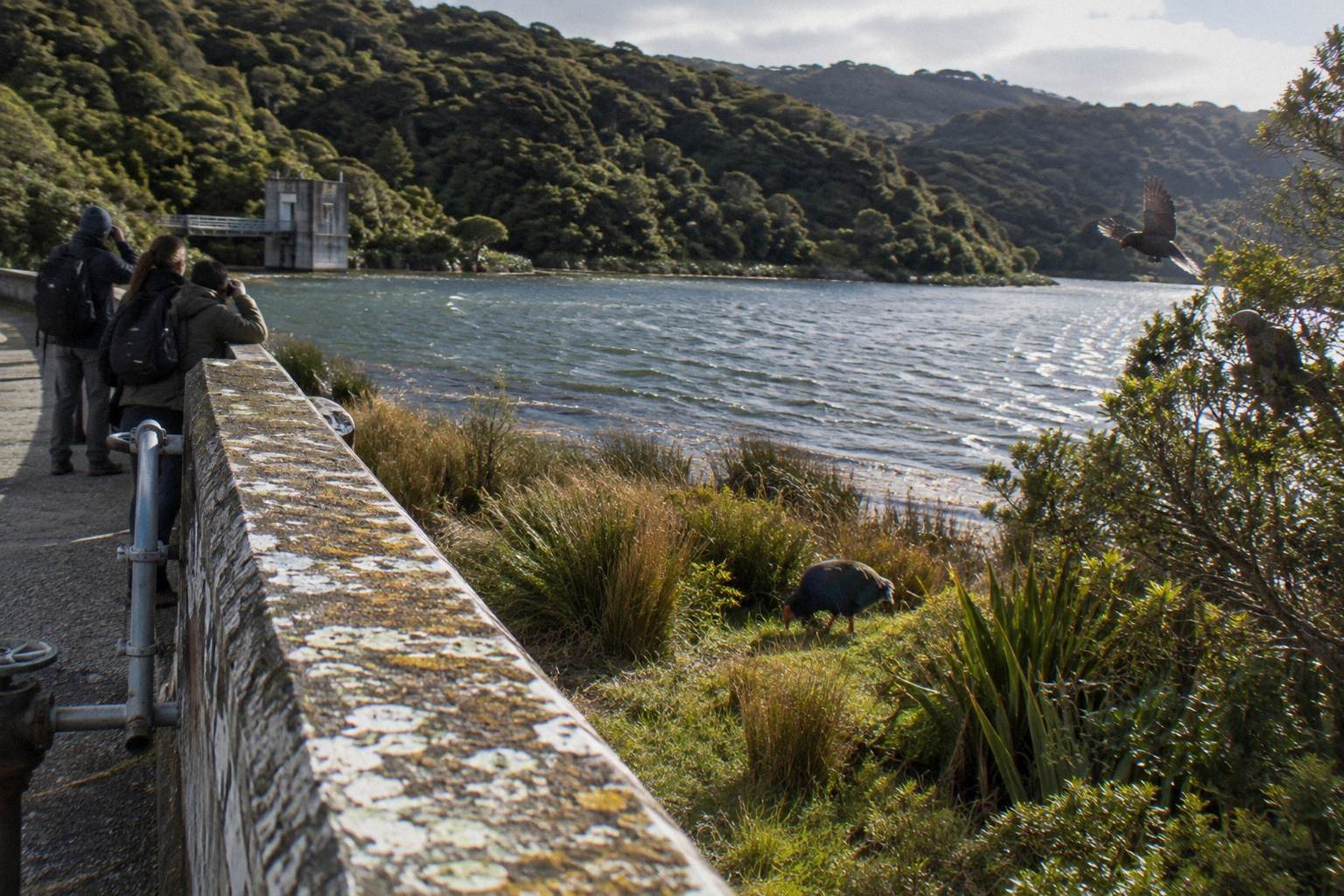
What makes the wildlife reachable is the guide's local knowledge. Takahe graze in open grass areas where a guide can point them out from a distance; tuatara bask in specific spots that a guide has learned to scan; hihi and tieke come to feeding stations that a first-time visitor would walk straight past. The lineup of target species is the sanctuary's own list, and it is deliberately written as "might see" rather than "will see". Wild animals move on their own schedules, and the fence keeps the predators out, not the birds in one place.
Here is the full day-walk roll-call as the tour page presents it, with the status language the sanctuary itself uses:
| Species | What it is | Status language used |
|---|---|---|
| Takahe | Large flightless rail | Nationally Vulnerable |
| Tuatara | Ancient reptile, returned 2005 and 2007 | First mainland release |
| Hihi (stitchbird) | Nectar-feeding forest bird | Rare |
| Kaka | Bush parrot, returned early 2000s | At risk |
| Tieke (saddleback) | Ground-foraging songbird | Recovering |
| Toutouwai (robin) | Inquisitive forest robin | At risk, recovering |
| Pateke (brown teal) | Small duck | Recovering |
| Tui, kereru, korimako | Common forest birds | Widespread in the valley |
One absence matters more than any presence: kiwi are not a day-tour prospect. The official general admission page calls nocturnal wildlife such as kiwi, ruru, weta and frogs very unlikely by day. If seeing a kiwi is the goal, the night walk is the only tour built around it, and even there nothing is guaranteed. Planning the rest of the day around the walk is easy: our one day in Wellington with a Zealandia tour guide shows where it fits.
Takahe: What The Sanctuary Says About Them
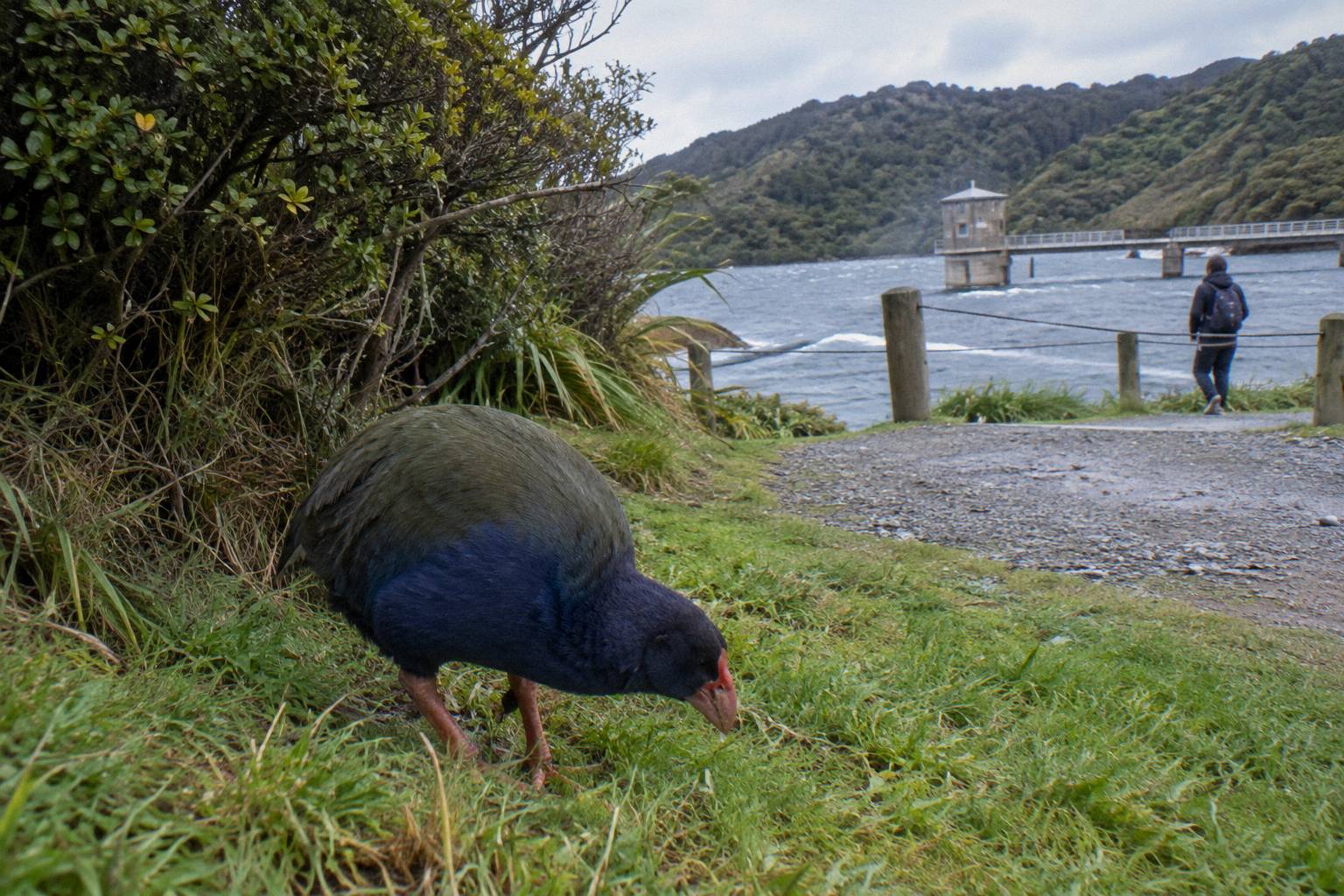
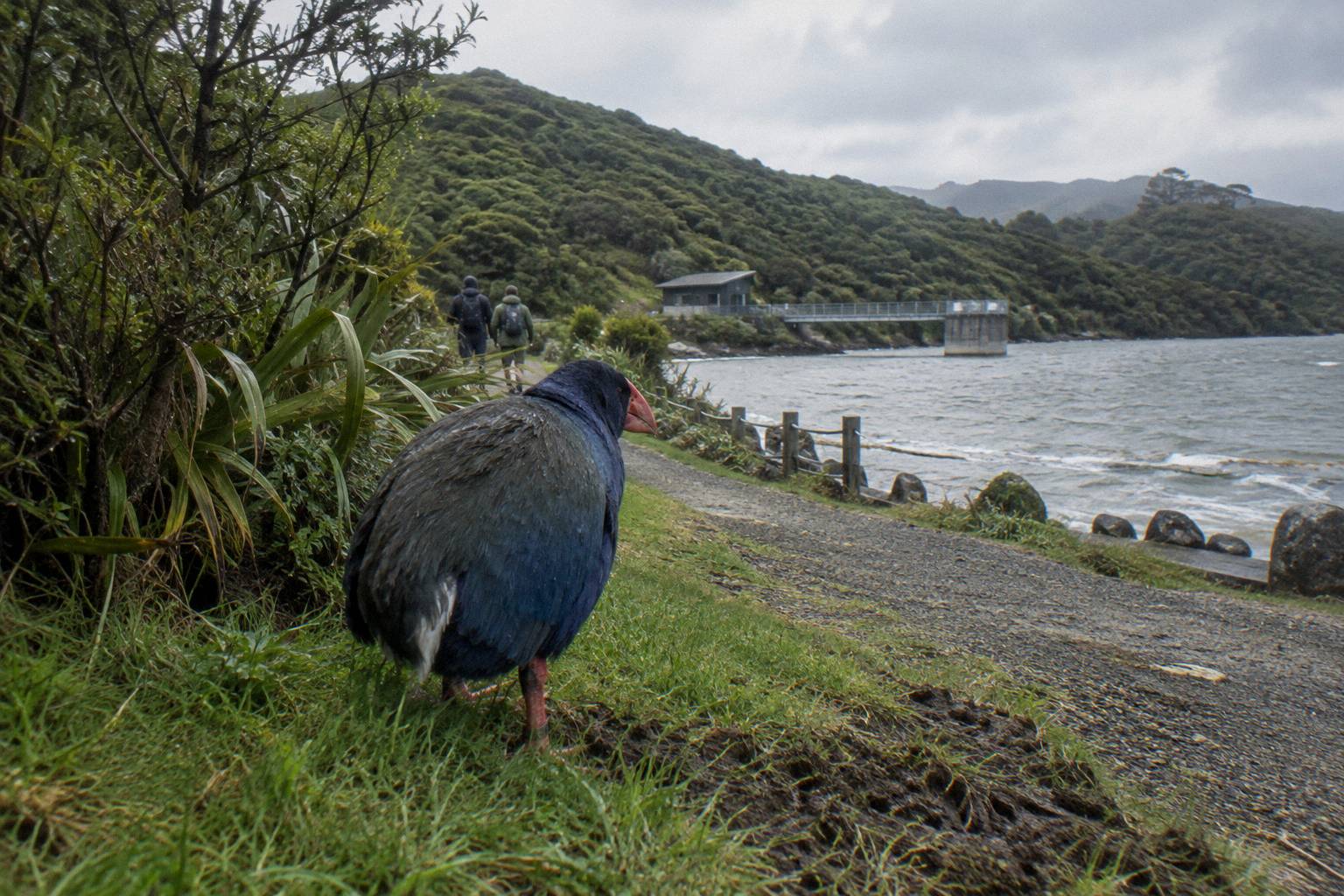
A takahe pair arrived in 2011, and the species is classed Nationally Vulnerable. Takahe are large, flightless and slow-moving, which makes them one of the more findable animals on a day walk: guides look for them in the valley's open grassy areas. As with everything here, the sighting is written as a chance, never a promise.
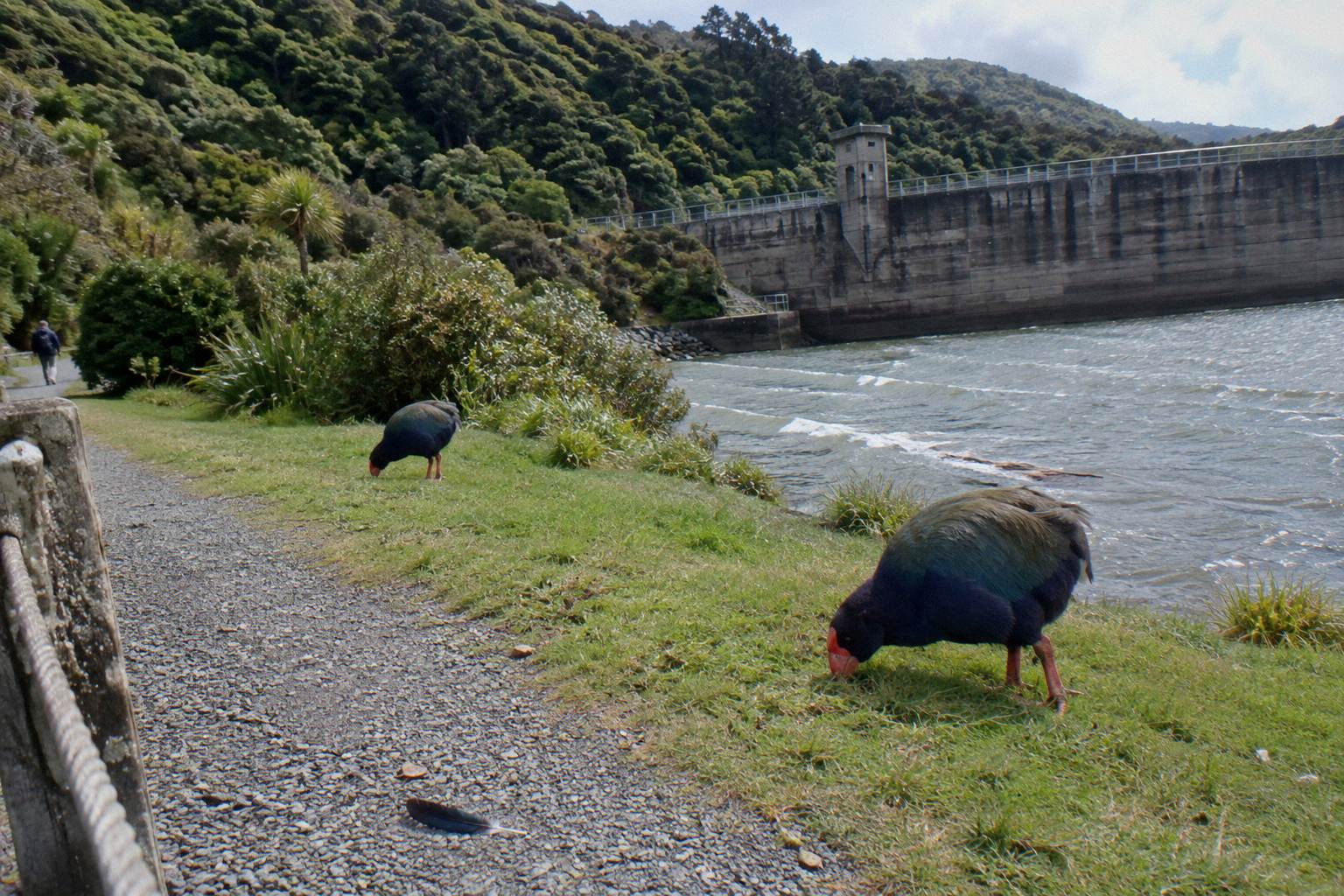
Takahe were long feared extinct, then rediscovered in the South Island, and now survive in managed sanctuaries like this one. At Zealandia they behave the way grazing birds behave: they work through grass, they are less skittish than most forest species, and they hold territory. That behavioural profile is why a guide's odds of pointing one out are better than for, say, a fast-moving hihi. They also matter as a conservation story: a breeding pair inside a predator-exclusion fence is exactly what the 1999 fence was built to enable, and the trust that runs the valley, Karori Sanctuary Trust, launched in 1995 to pursue exactly that outcome.
The sanctuary's own species page carries the standing details, and its language is worth matching to what a guide says on the walk: the official takahe page describes the species' history and its place in the valley. Our companion guide to the big three, whether you can see takahe on a Zealandia tour, digs into where in the valley the guides typically scan for them.
The larger frame is that takahe sit alongside little spotted kiwi as the sanctuary's flagship species, and their conservation statuses differ: takahe Nationally Vulnerable, little spotted kiwi At Risk-Recovering. A guide will usually explain what those bands mean, which is one of the quiet benefits of a guided walk over a self-guided visit, a trade-off we compare in guided tour or self-guided visit. Recognising the two species apart also matters, because pukeko, a common relative, share parts of the valley, and visitors regularly mistake one for the other until a guide draws the differences.
Tuatara: The Mainland Return
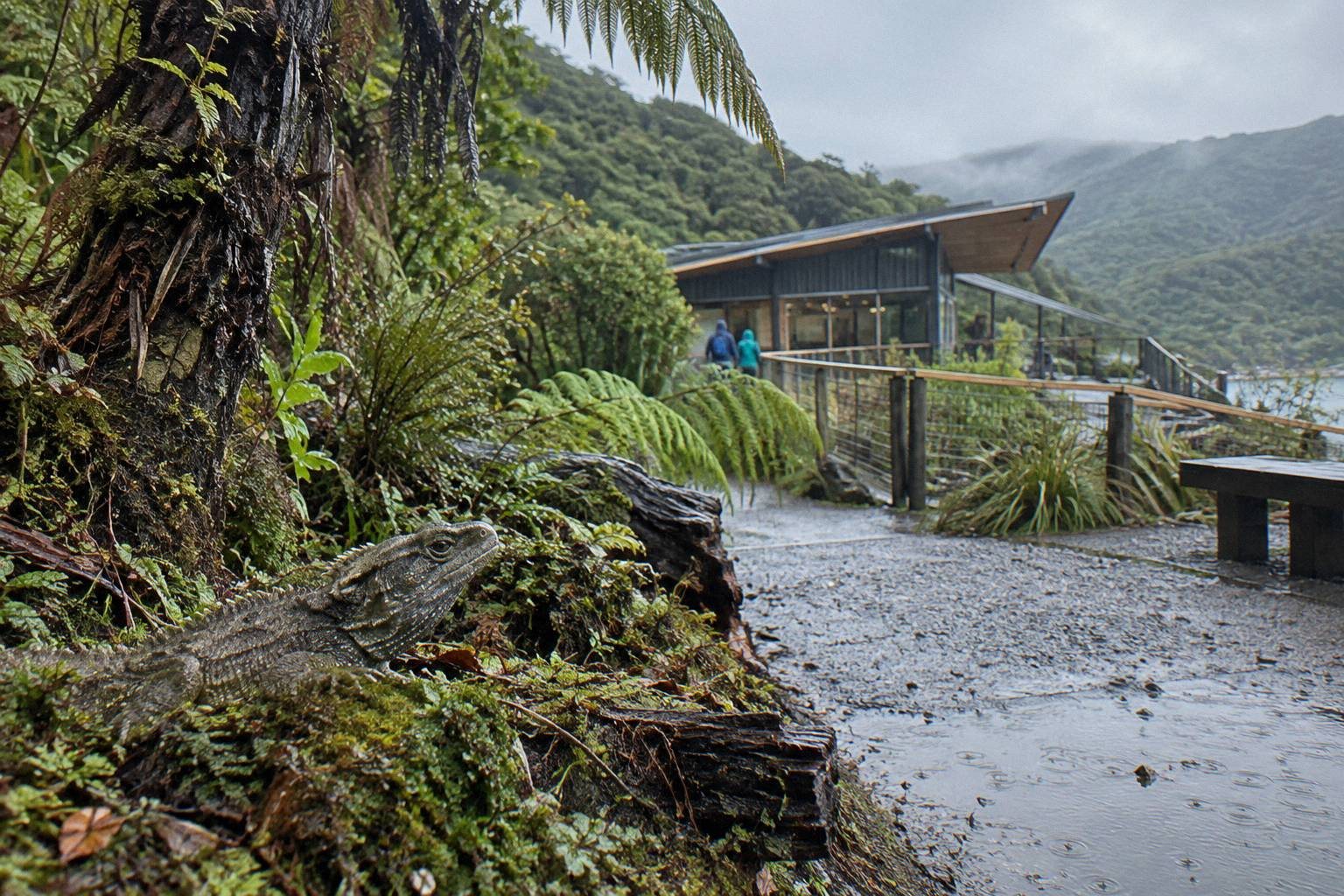
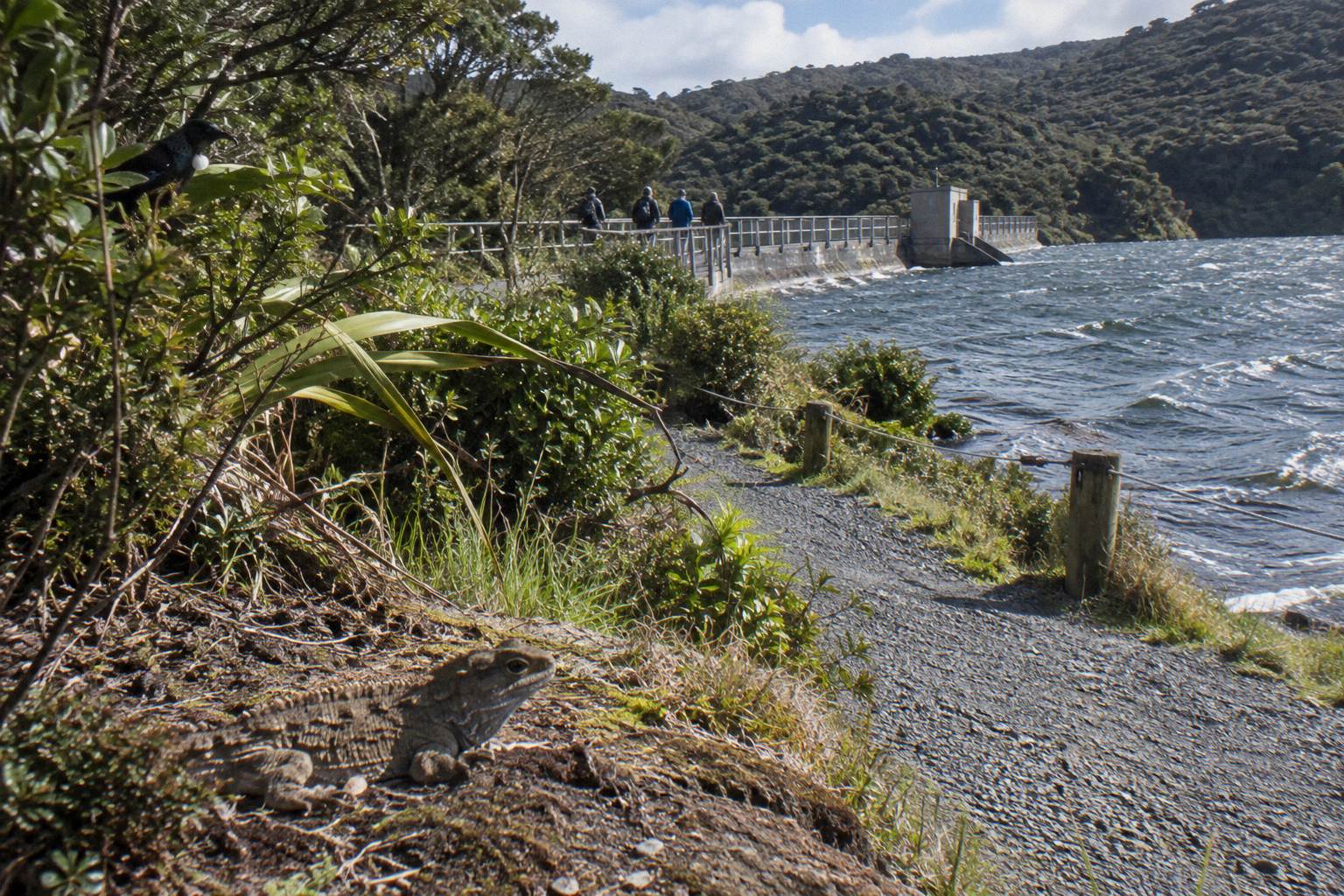
Tuatara returned to the mainland at Zealandia in releases in 2005 and 2007, the first of their kind. They bask in known spots, so day-walk guides have specific places to scan, and the sanctuary's reptile page notes Hamilton's frog is sometimes seen on the night and twilight tours too. Tuatara are reptiles older than the fence, the dam and the city around them.
Tuatara are the survivor species of an ancient lineage, and their return to a mainland valley was a landmark moment for the sanctuary. Inside the fence they live slowly: basking when the sun allows, hunting invertebrates at night, holding burrows. Daylight sightings depend on whether an individual has chosen to sit out in the open, which is why guides treat them as chances rather than fixtures. Photography is allowed on the tour, and a basking tuatara is one of the more photogenic rewards of a slow, quiet group of up to 12 rather than a crowd.
For deeper background on the animal itself, the sanctuary's tuatara page covers the biology and the return programme. One boundary applies here and everywhere in the article: the sanctuary's history pages do not record a first wild-born tuatara year, and no tour script should be quoted as if they did. What is printable is the release years, 2005 and 2007, and the label the sanctuary itself uses: the first mainland release.
The valley they returned to carries its own deep history, which the day walk crosses. Before the fence, this was a Wellington water supply: an earth dam built between 1876 and 1878, a concrete gravity dam completed in 1908, and the upper dam taken out of service in 1991. Remnants of that era sit in the landscape, and guides often fold it into the walk alongside the wildlife. The night walk adds the other reptile-and-amphibian chances: tuatara again, wetapunga, and Hamilton's frog, which the official reptiles page says is "sometimes seen" on the night and twilight tours. Those are torchlit finds, and the torches are supplied on the night tour per its booking page.
Kaka, Hihi, Tieke And Toutouwai
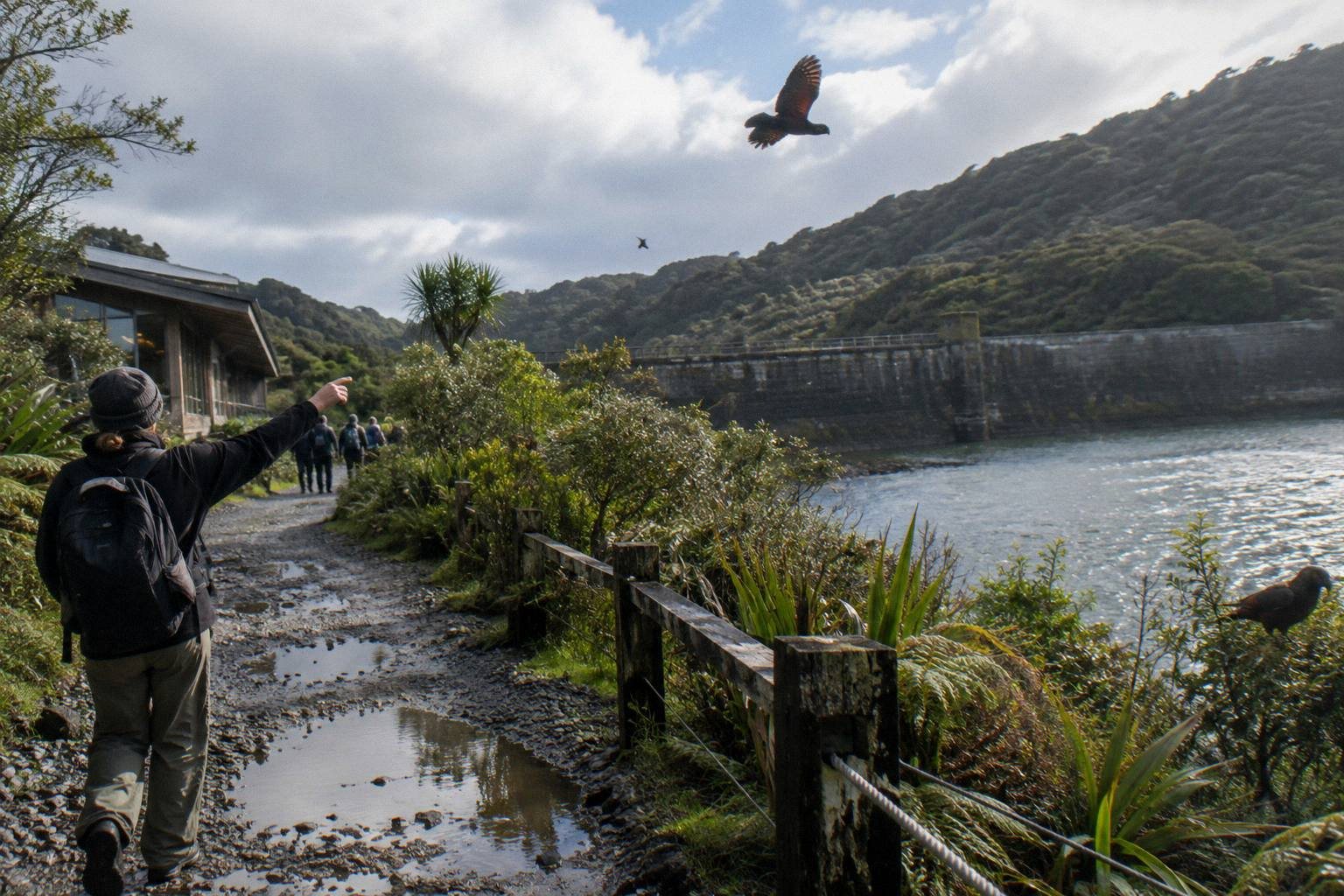
Kaka returned in the early 2000s and are the loudest, most aerial presence in the valley, often heard before they are seen. Hihi, tieke and toutouwai are smaller forest birds the guides look for around feeding stations and understory. Toutouwai are famously inquisitive and may approach walkers; kaka may put on a full valley-crossing display. None is promised.
Kaka are the bush parrots people remember. They screech, they fly in loose groups above the canopy, and they work the tree tops with a chaotic energy that is very different from a grazing takahe or a still tuatara. Because they move, guides track them by ear first, which is precisely the skill a visitor does not have on day one. The sanctuary dates their return only to the early 2000s, and that vagueness is deliberate on its part: no single year is claimed, so no single year should be quoted.
Hihi (stitchbirds) feed on nectar and come to stations a guide knows. Tieke (North Island saddlebacks) forage on trunks and the ground and are strongly patterned, so a guide's pointer lands well. Toutouwai (North Island robins) are the charmers: inquisitive birds that may come close to walkers, especially where the leaf litter has been disturbed by passing feet. A quiet group of up to 12, which is the day tour's cap, suits all three far better than a self-guided crowd moving at its own pace.
For photographers, this mid-canopy layer is the productive one, and our photography on a guided tour guide covers which sections of the walk give the best light and backgrounds. Bird behaviour also shifts with the clock, so pairing this with opening hours and best time of day helps if you are choosing between a morning and an early-afternoon departure.
Which Animals Belong To The Night Walk?
Zealandia By Night guides look for little spotted kiwi, tuatara, takahe, pateke, wetapunga, Hamilton's frog, ruru, glowworms and kaka. The tour runs about 2.5 hours around dusk, nightly, for up to 12 people aged 12 and over, with torches supplied, and ends with a warm kawakawa, lemongrass and ginger tea at the visitor centre.
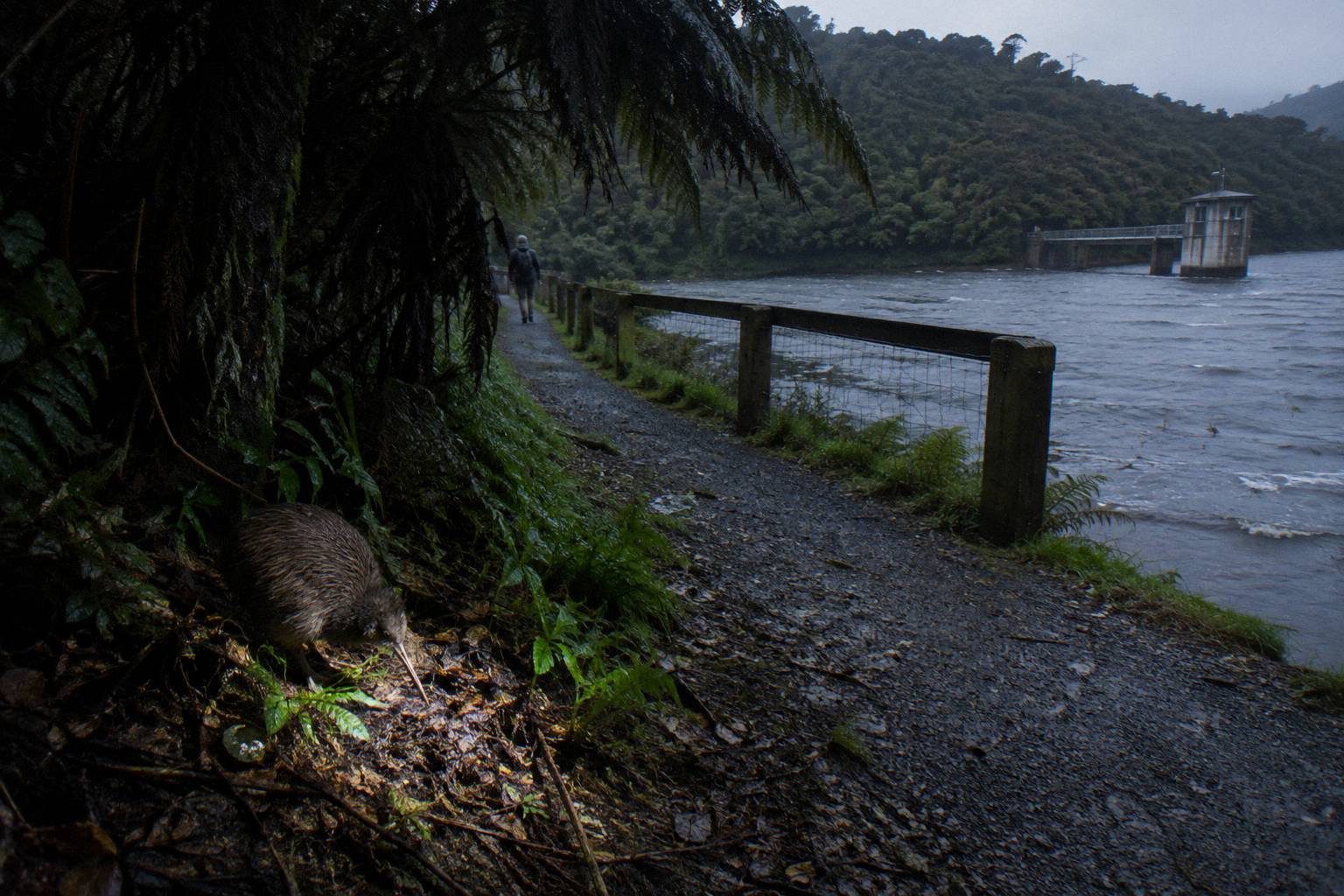
The night walk is built around one animal. Little spotted kiwi were brought here as 40 birds in 2000 and 2001, and the population is now estimated in the hundreds. The official wording is careful and worth quoting exactly: "while kiwi are seen on most tours, sightings are not guaranteed." That is the strongest sighting language the sanctuary uses anywhere, and it is still not a promise. Kiwi are wild, territorial and vocal, and a dusk start time, confirmed at booking, is chosen to match their emerging hours.
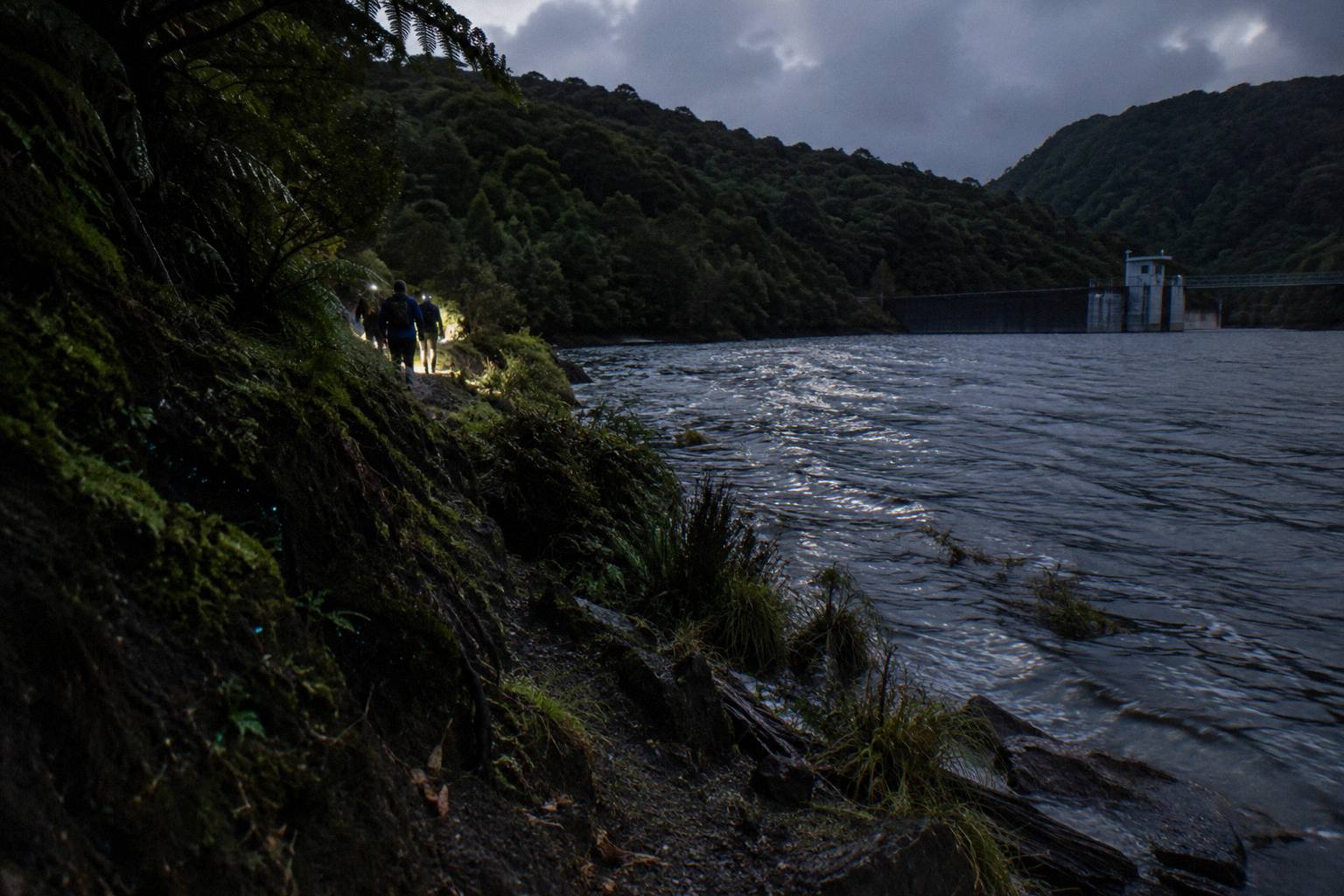
Around the kiwi, the night lineup fills out with species that share the dark. Ruru (morepork) call and hunt after dusk. Wetapunga, the giant weta, sit out on vegetation. Hamilton's frog is "sometimes seen", per the reptiles page. Glowworms, titiwai, are pointed out in the banks by guides, never promised. Takahe and pateke can appear as daytime animals settling for the night, and kaka sometimes roost noisily.
| Night-walk species | How guides find them | Sanctuary language |
|---|---|---|
| Little spotted kiwi | Listening for calls and movement | Seen on most tours, not guaranteed |
| Ruru | Calls, then torchlight | Might see |
| Tuatara | Torchlit basking spots | Might see |
| Wetapunga | Torch scan of vegetation | Might see |
| Hamilton's frog | Torchlight near damp habitat | Sometimes seen |
| Glowworms (titiwai) | Pointed out in banks | Pointed out, never promised |
| Takahe, pateke, kaka | Settling birds at dusk | Might see |
The age limit matters for families: the night tour is 12 and over, and the sanctuary points families with younger children to the Twilight Tours and the Kids' Night Walks. Service dogs, admitted by day with advance notice, are never admitted at night. Arrive 15 minutes early at the visitor centre; after-hours entry is up the driveway to the right of the building, and visitors may not stay behind in the sanctuary after closing to wait. Our full night tour guide covers the practicalities in depth, and if the kiwi is the sole reason for your trip, where to see a kiwi in Wellington lays out why this walk is the practical answer.
How Do Sightings Work, And What Is Never Promised?
Every wildlife mention on every Zealandia tour is a chance: the sanctuary writes "might see" on its tour pages and "not guaranteed" for kiwi. Weather, season, time of day and pure luck all move the odds. No guide, listing or page promises a species, and no tour refunds for a quiet valley. That candor is the system working.
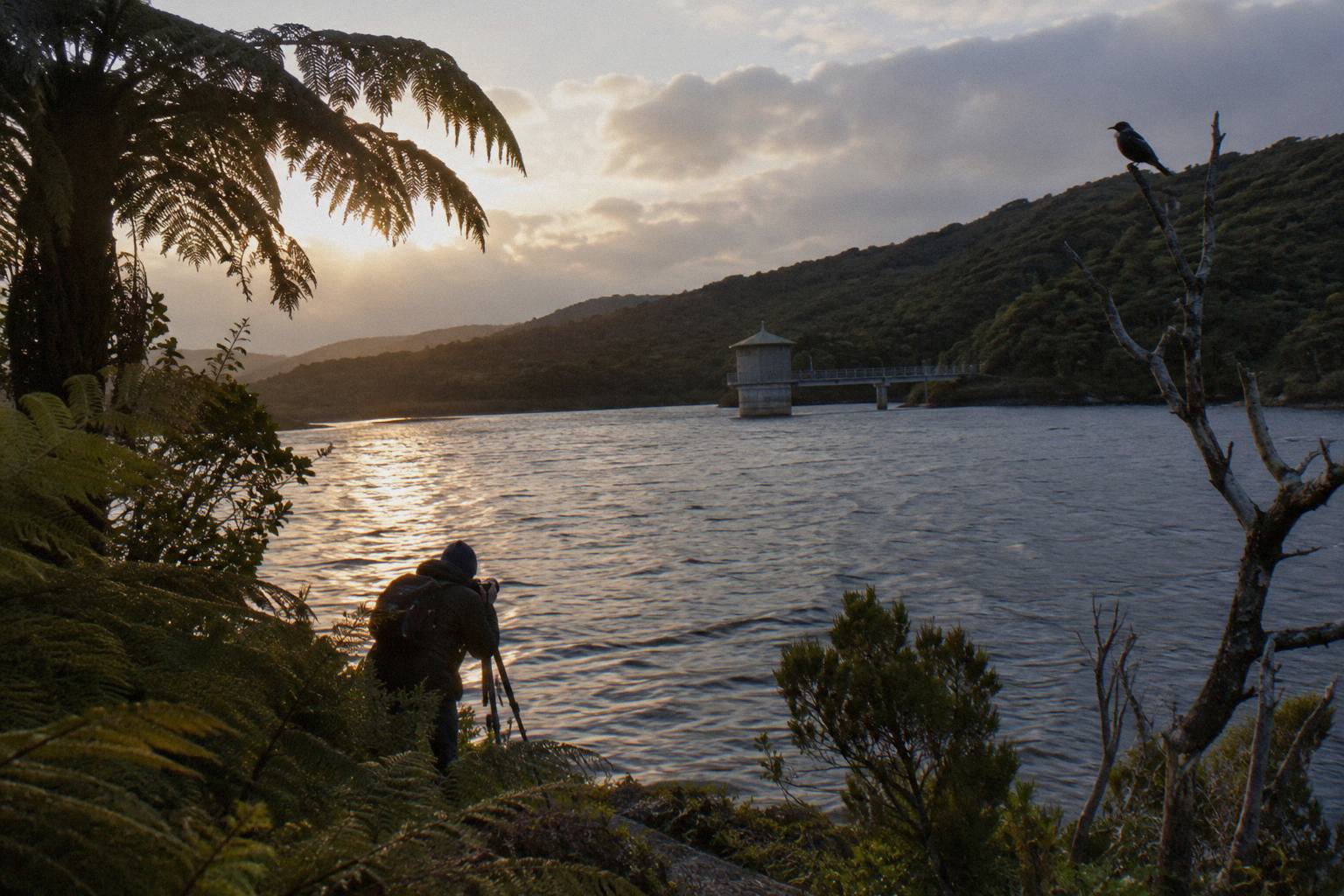
This framing is not a legal disclaimer bolted on at the end; it is how the sanctuary communicates from the top of its tour pages down. There are good ecological reasons. Birds respond to weather and season. Reptiles bask only when the sun cooperates. Kiwi emerge on their own schedule. A fenced 225-hectare valley is a genuine wild population, not a zoo, and a guarantee would be misleading in the other direction: it would turn a conservation project into a performance.
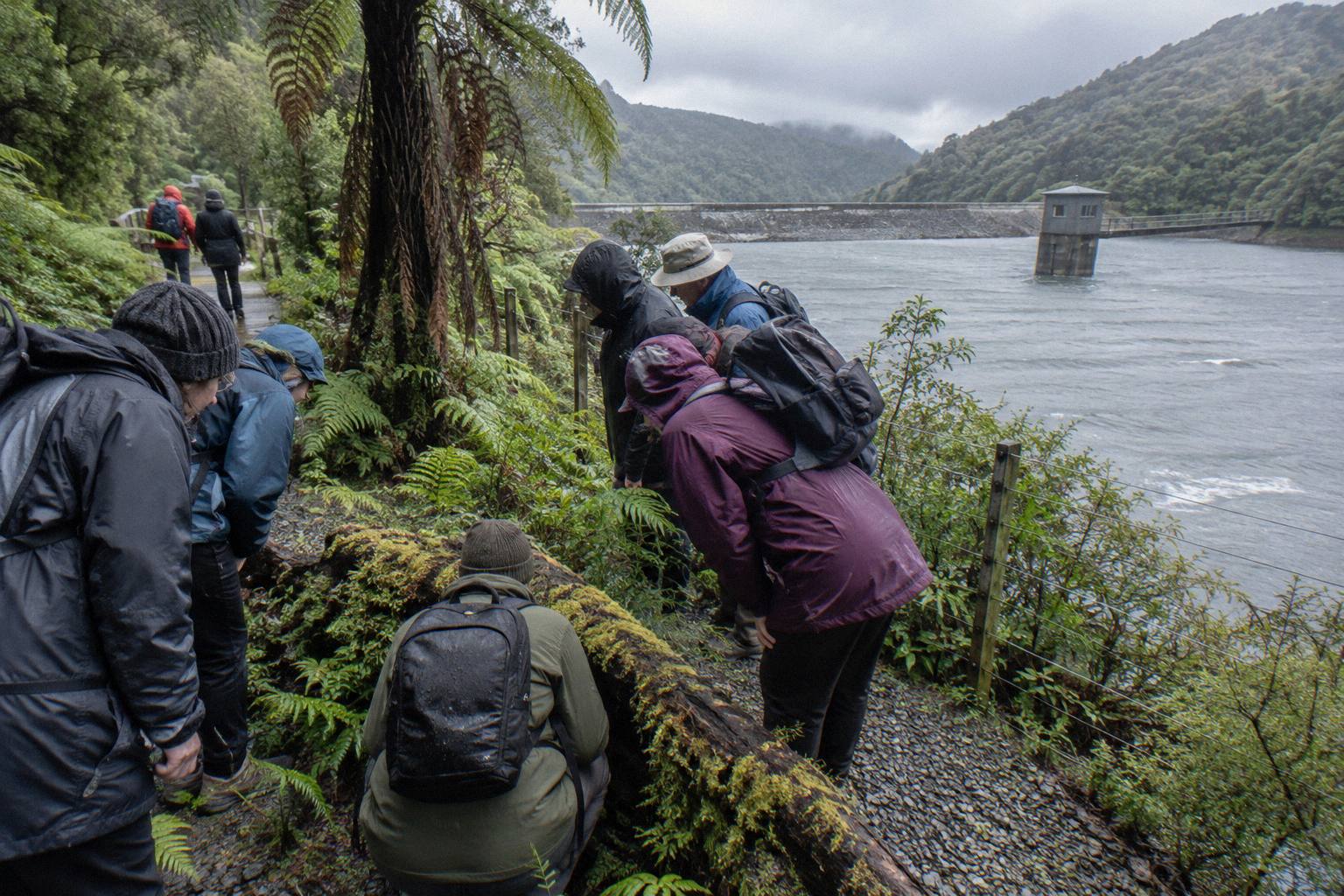
What a guide changes is your share of the odds. Knowing that toutouwai follow disturbed leaf litter, that hihi work the feeding stations, that kaka are located by ear first, and that glowworms sit in particular banks converts a walk into a series of informed searches. A group capped at 12 keeps noise down. The tour's own design, a quiet pace with stops, exists to serve exactly this.
That ticket detail is the practical backstop for the uncertainty: because every tour ticket includes admission for the following day as well, a valley that stayed quiet during your two guided hours can be revisited the next morning at no extra cost. It is the sanctuary's own answer to the fact that wildlife does not take bookings.
How Do Guides And Species Pages Help You Prepare?
Guides convert the sanctuary's scattered local knowledge, feeding stations, basking spots, call recognition, into a two-hour walk, while the sanctuary's own species pages give you the background before you arrive. Read the tuatara and takahe pages the evening before, bring sturdy shoes and quiet habits, and let the guide handle the finding. The prep costs nothing but attention.
Preparation divides into two halves. The first is behavioural: knowing that takahe graze open grass, that kaka announce themselves, that toutouwai may approach you, and that glowworms live in banks means every pointer from your guide lands faster. The second is logistical: the day tour meets inside the visitor centre, arrive 15 minutes early, it runs in almost all weather, and it needs sturdy shoes, warm clothes and a waterproof layer. The what-to-wear guide covers the kit list in full.
The guides themselves are professional, and the lineup's language is worth reading closely: the day tour "includes a professional guide and a General Admission ticket". That combination, expertise plus a two-day entry window, is the product. On a site named Zealandia Day Tour, this wildlife roll-call is the reason the day walk exists at all: the fence made the populations possible, and the guide makes them findable.
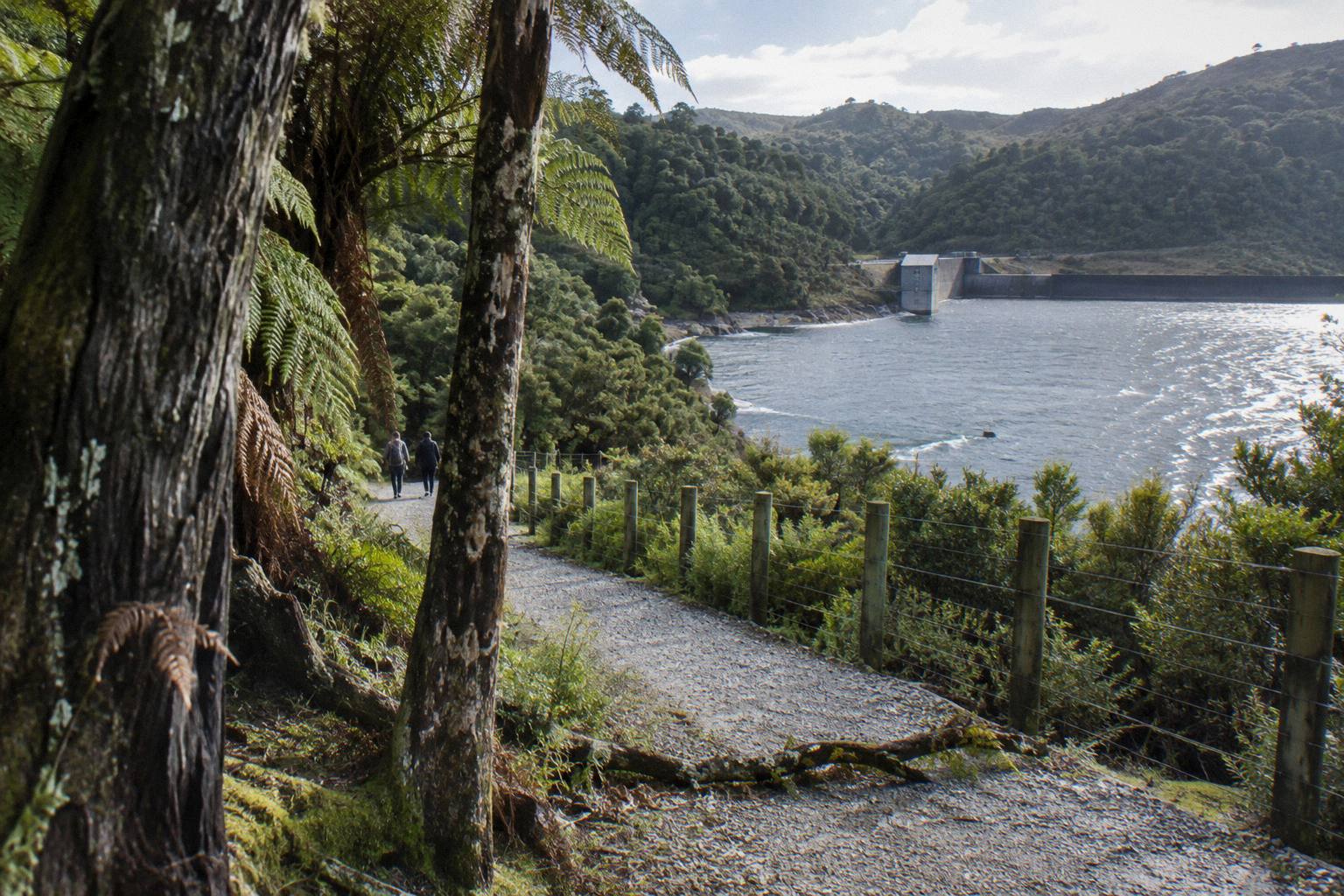
There is also a third option between day and full dark. The Twilight Tour, about 2.5 hours from daylight into dark, minimum age 5, runs October to March on the sanctuary's schedule, includes hot kawakawa tea, and covers the dusk chorus and birds settling to nest, with a chance of carrying into kiwi hours. It is the natural pick for families whose children are too young for the night walk.
Finally, for plant-minded visitors, the new Forest Secrets Plant Walk takes the same small-group format in a plants-led direction, covering how forest plants compete and adapt, Sunday mornings at 10:30am per the sanctuary, from NZ$70 per person, with no rating yet as a new listing. It shares the format of the day walk, a group of up to 12 and about two hours on foot, so the same kit and fitness advice applies.
| Tour | Length | Wildlife focus | From price | Notes |
|---|---|---|---|---|
| Zealandia By Day | About 2 hours | Takahe, tuatara, hihi, kaka, tieke, toutouwai, pateke | NZ$70 per person | No minimum age, under 5s free, 4.8 from 252 reviews |
| Zealandia Twilight | About 2.5 hours | Dusk chorus, birds settling, chance into dark | NZ$110 per person | Min age 5, October to March, 4.8 from 84 reviews |
| Zealandia By Night | About 2.5 hours | Kiwi, ruru, wetapunga, frogs, glowworms | NZ$120 per person | Min age 12, nightly, 4.8 from 164 reviews |
| Forest Secrets Plant Walk | About 2 hours | Plants-led, not wildlife-led | NZ$70 per person | Sunday 10:30am, no minimum age, no rating yet |
Common Mistakes About Wildlife Expectations
The common mistakes are expecting a guaranteed kiwi, expecting night species on a day walk, treating a quiet hour as a failed tour, and reading crowd ratings as sighting odds. Every Zealandia tour states its wildlife as chances, kiwi very unlikely by day and not guaranteed by night, and the strongest strategy is a guide, quiet habits and the free next-day entry.
The first mistake is booking the day walk and hoping for a kiwi. The official general admission page is blunt: kiwi, ruru, weta and frogs are very unlikely by day. The night walk exists precisely because of that, and its own language still stops short of a promise. The second is the reverse error: expecting a 2.5-hour night walk to deliver the full daytime lineup in torchlight. The lists overlap, but the experiences are built around different animals, and a torchlit valley looks and sounds nothing like the mid-morning one.
The third mistake is treating a sighting-poor tour as a dud. Reviews reflect whole experiences, guiding, story, tea at the visitor centre, not species checklists, and a 4.8 rating from 252 reviews on the day tour says nothing about any individual morning's takahe movements. The fourth is noise: loud groups shrink their own odds, and the 12-person cap only helps if the 12 cooperate. The fifth is skipping the included next-day admission, which is the sanctuary's own remedy for a quiet first pass through the valley.
Common Questions About Zealandia Wildlife On Tour
Will I See A Kiwi On The Zealandia Day Tour?
No. The official general admission page calls kiwi and other nocturnal wildlife very unlikely by day. Kiwi are a night-walk prospect only, and even there the sanctuary's wording is "seen on most tours, sightings are not guaranteed".
Which Animals Do Day-Walk Guides Look For?
Takahe, tuatara, hihi, kaka, tieke, toutouwai and pateke, plus tui, kereru and korimako. All are phrased as chances, "might see", never promises, on the sanctuary's own tour page.
Can Kids Join The Night Tour?
The night tour has a minimum age of 12. Families with younger children are pointed by the sanctuary to the Twilight Tours, minimum age 5, October to March, and the Kids' Night Walks, April to September.
Are Glowworms Guaranteed On The Night Walk?
No. Glowworms are pointed out in the banks by guides but are never promised. The night lineup also includes kiwi, ruru, tuatara, wetapunga, Hamilton's frog, takahe, pateke and kaka, all as chances.
What Happens If We Do Not See Much Wildlife?
Every tour ticket includes General Admission valid for the tour day and the next, so you can return for a self-guided second visit at no extra cost. Sightings are chances, and no tour promises a species.
Is The Plant Walk A Wildlife Tour?
Not primarily. Forest Secrets is plants-led, about how forest plants compete and adapt, about 2 hours on Sunday mornings at 10:30am, from NZ$70 per person. It is a new listing with no rating yet.